


 ZooKeys


Info
The Chandelier Cave on the island of Ngerchaol is a well-known underwater cave; its name derives from the large, irregular stalactite formations that hang from the cave ceiling underwater, resembling chandeliers.
This underwater cave consists of two large underwater chambers with air pockets in the ceiling; the entrance is located at a depth of approximately 3 meters.
Marine sponges and crust-forming invertebrates had colonized the cave, particularly in the entrance area, even though the surrounding water has no significant currents.
The water in all parts of the cave has the salinity of the open ocean or is close to it.
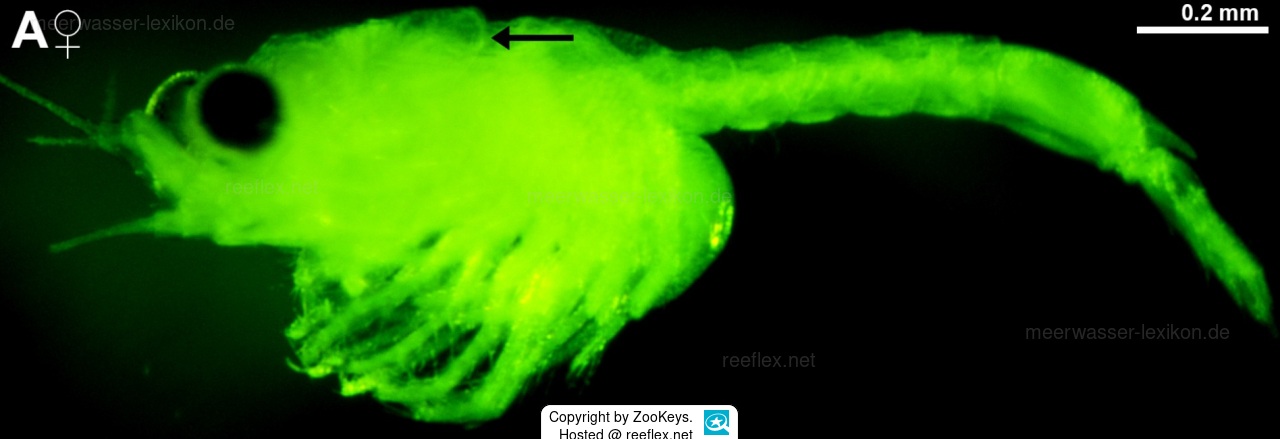
The first specimens of Palaumysis simonae were collected here as early as 1985, and the species was first described the following year.
In 2010, Palaumysis simonae was documented in an underwater cave near the Philippines, and in 2026, it was found in the “Turtle Tomb” on Sipadan Island, Sabah, Malaysia.
It is quite conceivable that there will be further reports of findings in other regional underwater caves in the future.
This small mysis is an important prey source for larger, carnivorous cave-dwelling organisms.
Etymology:
This species is dedicated to Ms. Simone Cousteau, a woman who devoted herself wholeheartedly to marine research and who led the scientific activities aboard the Calypso in Mr. Cousteau’s absence.
This underwater cave consists of two large underwater chambers with air pockets in the ceiling; the entrance is located at a depth of approximately 3 meters.
Marine sponges and crust-forming invertebrates had colonized the cave, particularly in the entrance area, even though the surrounding water has no significant currents.
The water in all parts of the cave has the salinity of the open ocean or is close to it.
The first specimens of Palaumysis simonae were collected here as early as 1985, and the species was first described the following year.
In 2010, Palaumysis simonae was documented in an underwater cave near the Philippines, and in 2026, it was found in the “Turtle Tomb” on Sipadan Island, Sabah, Malaysia.
It is quite conceivable that there will be further reports of findings in other regional underwater caves in the future.
This small mysis is an important prey source for larger, carnivorous cave-dwelling organisms.
Etymology:
This species is dedicated to Ms. Simone Cousteau, a woman who devoted herself wholeheartedly to marine research and who led the scientific activities aboard the Calypso in Mr. Cousteau’s absence.


