


 ResearchGate


Info
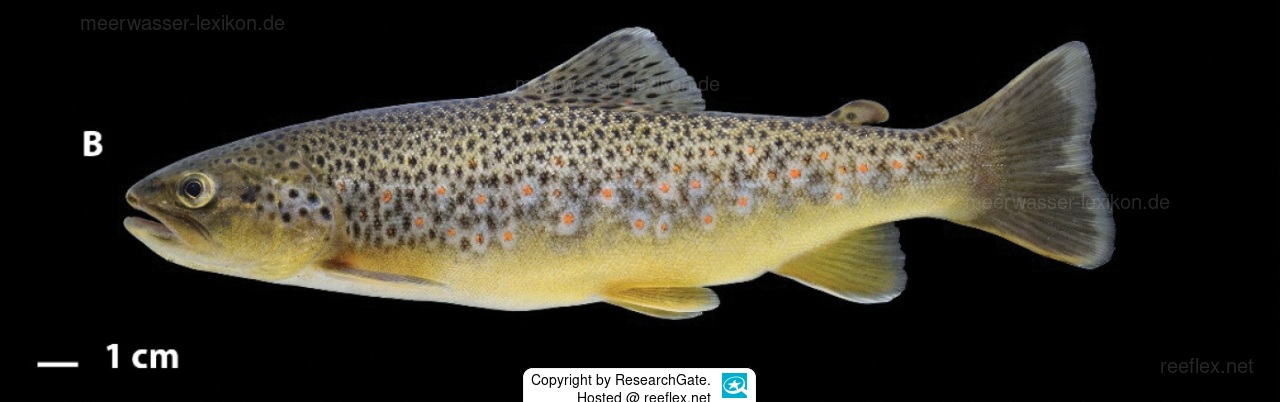
Salmo caspius is listed as an endemic species native to the Caspian Sea, but it is an anadromous migratory fish that lives in freshwater, marine, and brackish water habitats.
Information on Salmo caspius, an excellent food fish, is still very incomplete in some respects; this applies to both size data and dietary habits.
FishBase lists a maximum length of 25 cm (as of March 24, 2026), while the Caspian Biodiversity Information System records 130 cm.
While the report “Diet analysis of Salmo caspius in the Tonekabon River” lists various insects such as flies (Trichoptera, Ephemeroptera, Plecoptera, Diptera) as the main food source, the Caspian Biodiversity Information System lists crustaceans and fish—how is a 130-cm-long salmonid supposed to get full on small flies?
Adult trout, on the other hand, prey on sprats, spined loaches, and young shad.
To rear fish larvae and juvenile trout in aquaculture, they are fed, among other things, Artemia urmiana and freshwater shrimp (Gammarus).
In 2019, fish from aquaculture farms were able to enter the Shatt al-Arab River near Basra in southern Iraq due to heavy rains and flooding.
The potential impact of this escape on the regional fauna in Iraq has not yet been studied.
Anglers look forward to the fight with the Caspian trout.
Synonym: Salmo trutta caspius Kessler, 1877 · unaccepted
Information on Salmo caspius, an excellent food fish, is still very incomplete in some respects; this applies to both size data and dietary habits.
FishBase lists a maximum length of 25 cm (as of March 24, 2026), while the Caspian Biodiversity Information System records 130 cm.
While the report “Diet analysis of Salmo caspius in the Tonekabon River” lists various insects such as flies (Trichoptera, Ephemeroptera, Plecoptera, Diptera) as the main food source, the Caspian Biodiversity Information System lists crustaceans and fish—how is a 130-cm-long salmonid supposed to get full on small flies?
Adult trout, on the other hand, prey on sprats, spined loaches, and young shad.
To rear fish larvae and juvenile trout in aquaculture, they are fed, among other things, Artemia urmiana and freshwater shrimp (Gammarus).
In 2019, fish from aquaculture farms were able to enter the Shatt al-Arab River near Basra in southern Iraq due to heavy rains and flooding.
The potential impact of this escape on the regional fauna in Iraq has not yet been studied.
Anglers look forward to the fight with the Caspian trout.
Synonym: Salmo trutta caspius Kessler, 1877 · unaccepted

