
Anzeige
Fauna Marin GmbH Tunze Masterfisch Osci Motion Fauna Marin GmbH

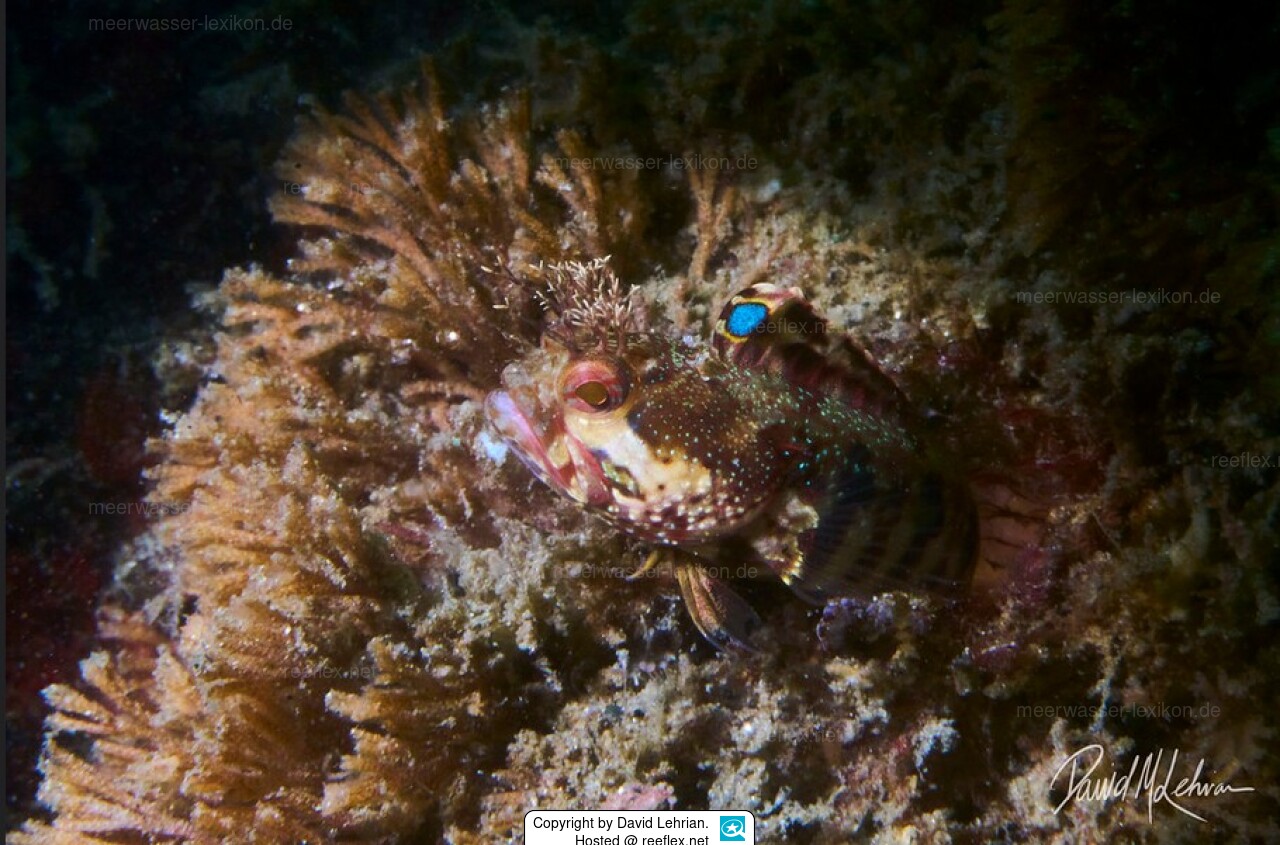
Neoclinus uninotatus Onespot Fringehead Blenny

Neoclinus uninotatus is commonly referred to as Onespot Fringehead Blenny. Difficulty in the aquarium: There are no reports available yet that this animal has already been kept in captivity successfully. Toxicity: Toxic hazard unknown.


Profilbild Urheber David Lehrian

Onespot Fringehead Blenny,Neoclinus uninotatus,Monterey Wharf #2- David Lehria


Courtesy of the author David Lehrian . Please visit www.flickr.com for more information.

Uploaded by Muelly.

Image detail


Profile

lexID:
18606 
AphiaID:
Scientific:
Neoclinus uninotatus 
German:
Einfleck Fransenkopf 
English:
Onespot Fringehead Blenny 
Category:
Blennies 
Family tree:
Animalia (Kingdom) > Chordata (Phylum) > Teleostei (Class) > Blenniiformes (Order) > Chaenopsidae (Family) > Neoclinus (Genus) > uninotatus (Species) 
Initial determination:
Hubbs, 1953 
Occurrence:
California, Eastern Pacific Ocean, Gulf of California, Mexico (East Pacific), USA 
Marine Zone:
Subtidal, sublittoral, infralittoral, deep zone of the oceans from the lower limit of the intertidal zone (intertidal) to the shelf edge at about 200 m water depth. neritic. 
Sea depth:
3 - 73 Meter 
Habitats:
Bays, Coastal waters, Demersal (bottom-dwelling fish), Rock crevices, Seawater, Sea water 
Size:
up to 9.84" (25 cm) 
Temperature:
62.6 °F - 84.2 °F (17°C - 29°C) 
Food:
Carnivore, Invertebrates 
Difficulty:
There are no reports available yet that this animal has already been kept in captivity successfully 
Offspring:
Not available as offspring 
Toxicity:
Toxic hazard unknown 
CITES:
Not evaluated 
Red List:
Least concern (LC)  
Related species at
Catalog of Life:
 
Author:
Publisher:
Meerwasser-Lexikon.de
Created:
Last edit:
2026-09-12 12:48:11 

Info

Neoclinus uninotatus Hubbs, 1953

Jumping guard
A jumping guard prevents (nocturnal) fish from jumping out.
Wrasses, blennies, hawkfishs and gobies jump out of an unprotected tank in fright if their night rest is disturbed, unfortunately these jumpers are found dried up in the morning on carpets, glass edges or later behind the tank.

https://www.korallenriff.de/en/article/1925_5_Jump_Protection_Solutions_for_Fish_in_the_Aquarium__5_Net_Covers.html

A small night light also helps, as it provides the fish with a means of orientation in the dark!

External links

  1. fishbase (en). Abgerufen am 12.09.2026.

Pictures

Commonly


Husbandry know-how of owners

0 husbandary tips from our users available
Show all and discuss