




 Dr. John Ernest (Jack) Randall (†), Hawaii


Info
Lethrinus crocineus is a demersal, solitary species that lives in reefs and stays in one place, hunting for food at night.
A detailed list of its prey is not known, as the large snapper will eat anything that comes its way.
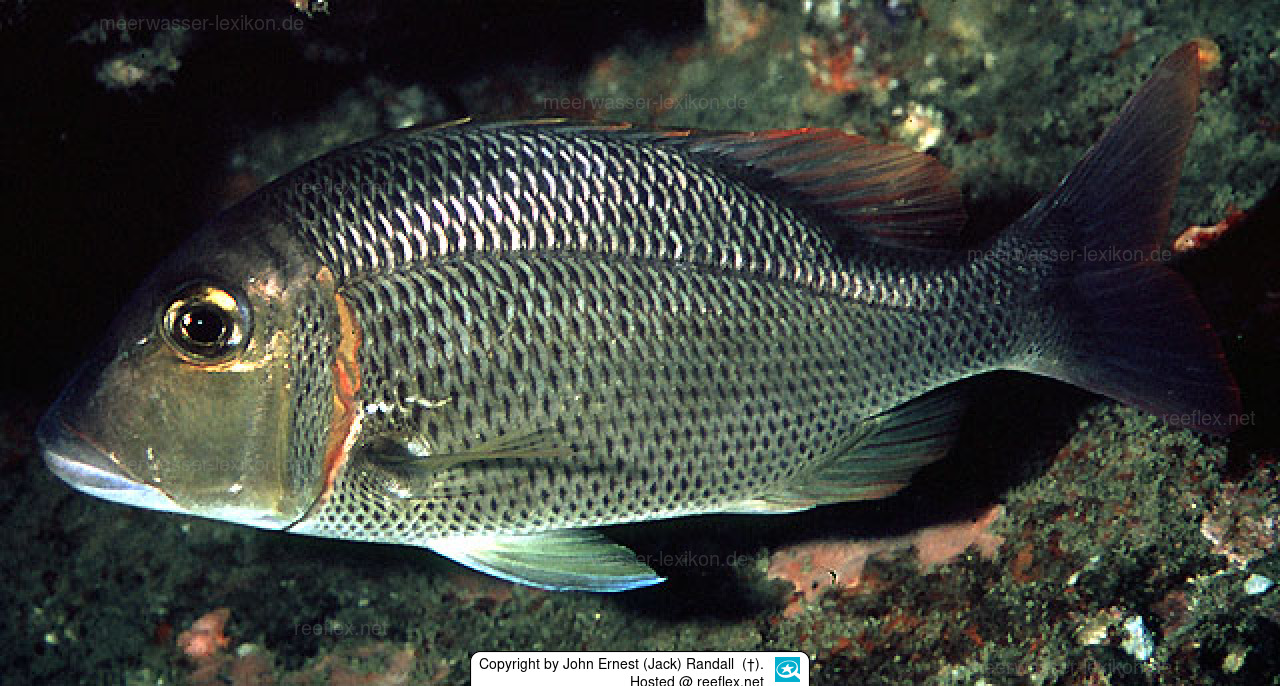
The body of this scavenger is reddish-brown or yellowish, with the base of the scales slightly black.
The head stands out clearly from the rest of the body with its brown color, while the dorsal, anal, caudal, and pectoral fins are pale or yellowish, with the edge of the dorsal fin reddish, dark orange, or yellowish. The pelvic fins are white.
The dorsal part of the fish is yellowish in color, with a black scale base, and whitish or light gray shading on the sides and belly.
The lips are pale orange.
Lethrinus crocineus is mainly caught with handlines and hooks and is usually sold fresh.
Similar species: Lethrinus mahsena (Forsskål, 1775)
Etymology:
The species name “crocineus” comes from the Latin “crocinus,” meaning saffron or orange-yellow, an allusion probably inspired by the predominantly yellowish coloration of live specimens, although Smith did not explicitly explain this reference in his original report.
A detailed list of its prey is not known, as the large snapper will eat anything that comes its way.
The body of this scavenger is reddish-brown or yellowish, with the base of the scales slightly black.
The head stands out clearly from the rest of the body with its brown color, while the dorsal, anal, caudal, and pectoral fins are pale or yellowish, with the edge of the dorsal fin reddish, dark orange, or yellowish. The pelvic fins are white.
The dorsal part of the fish is yellowish in color, with a black scale base, and whitish or light gray shading on the sides and belly.
The lips are pale orange.
Lethrinus crocineus is mainly caught with handlines and hooks and is usually sold fresh.
Similar species: Lethrinus mahsena (Forsskål, 1775)
Etymology:
The species name “crocineus” comes from the Latin “crocinus,” meaning saffron or orange-yellow, an allusion probably inspired by the predominantly yellowish coloration of live specimens, although Smith did not explicitly explain this reference in his original report.


